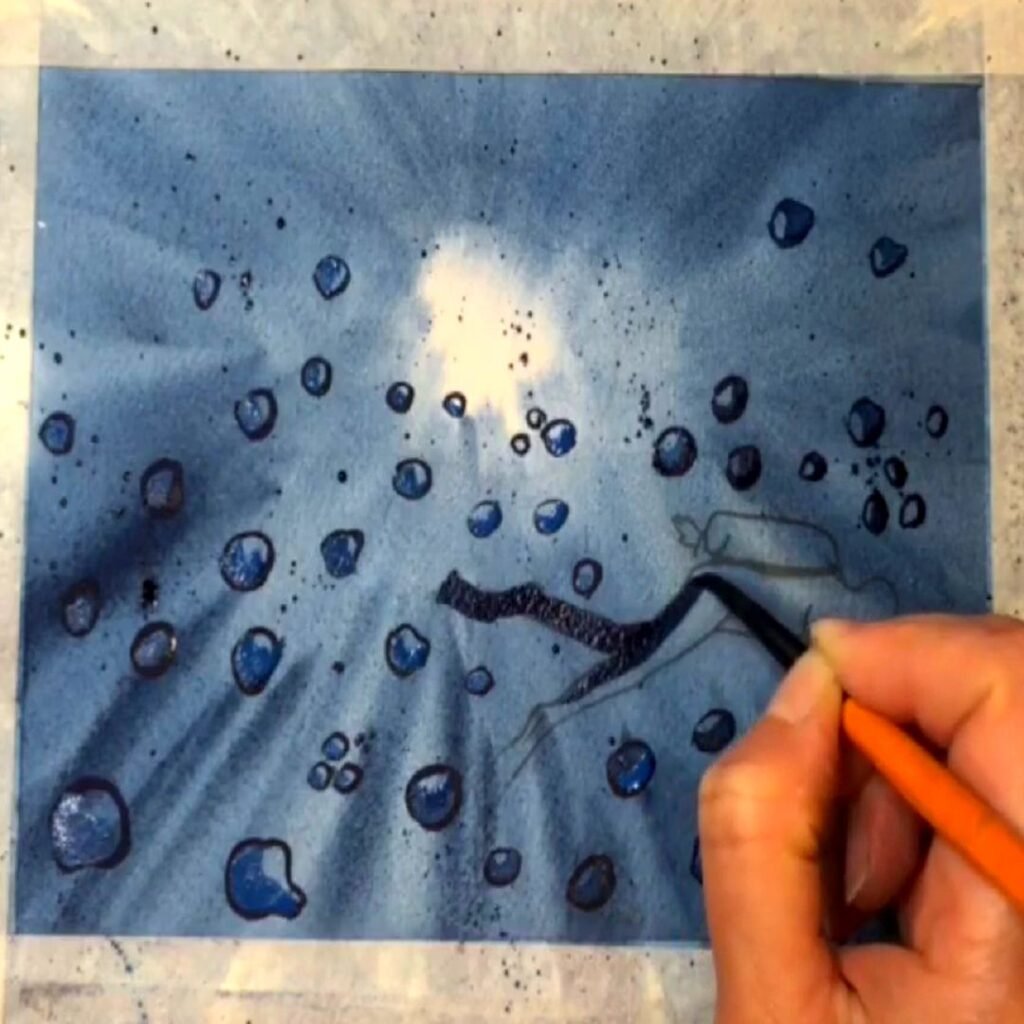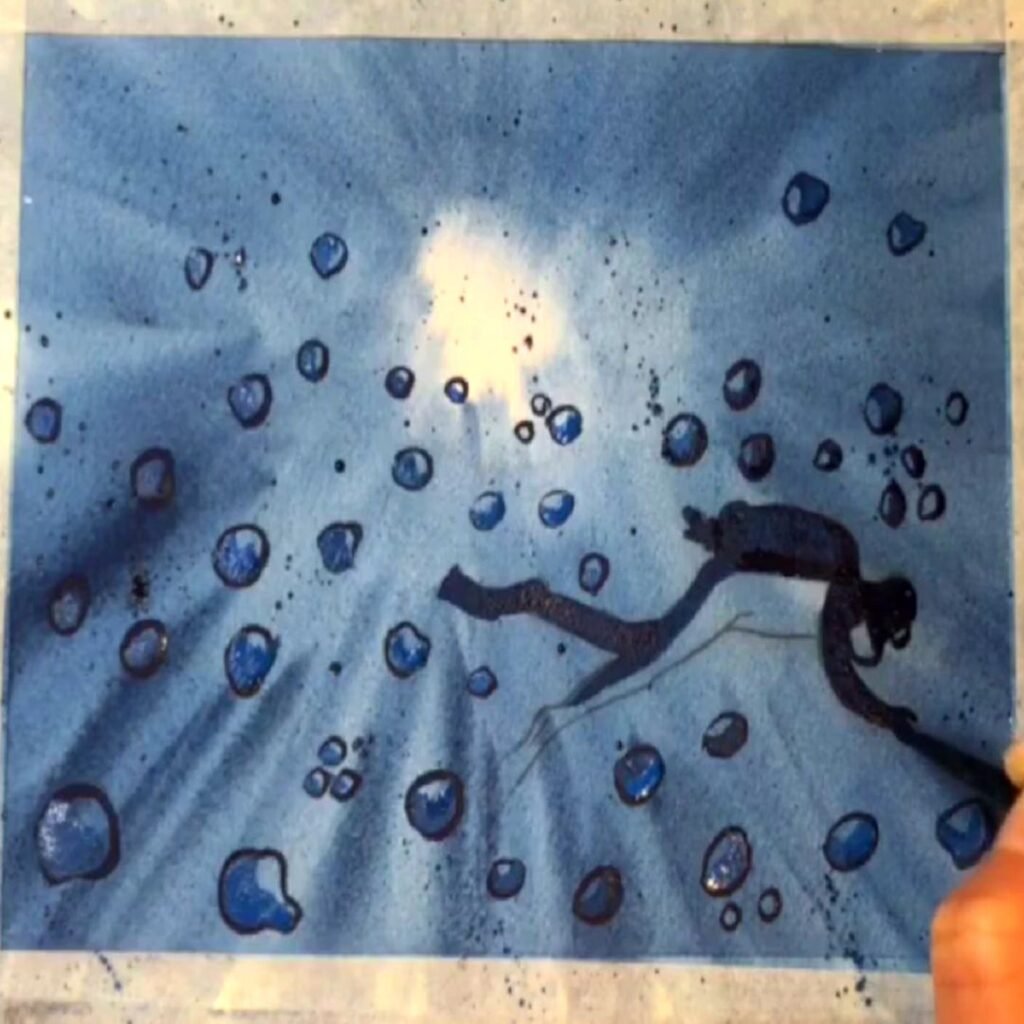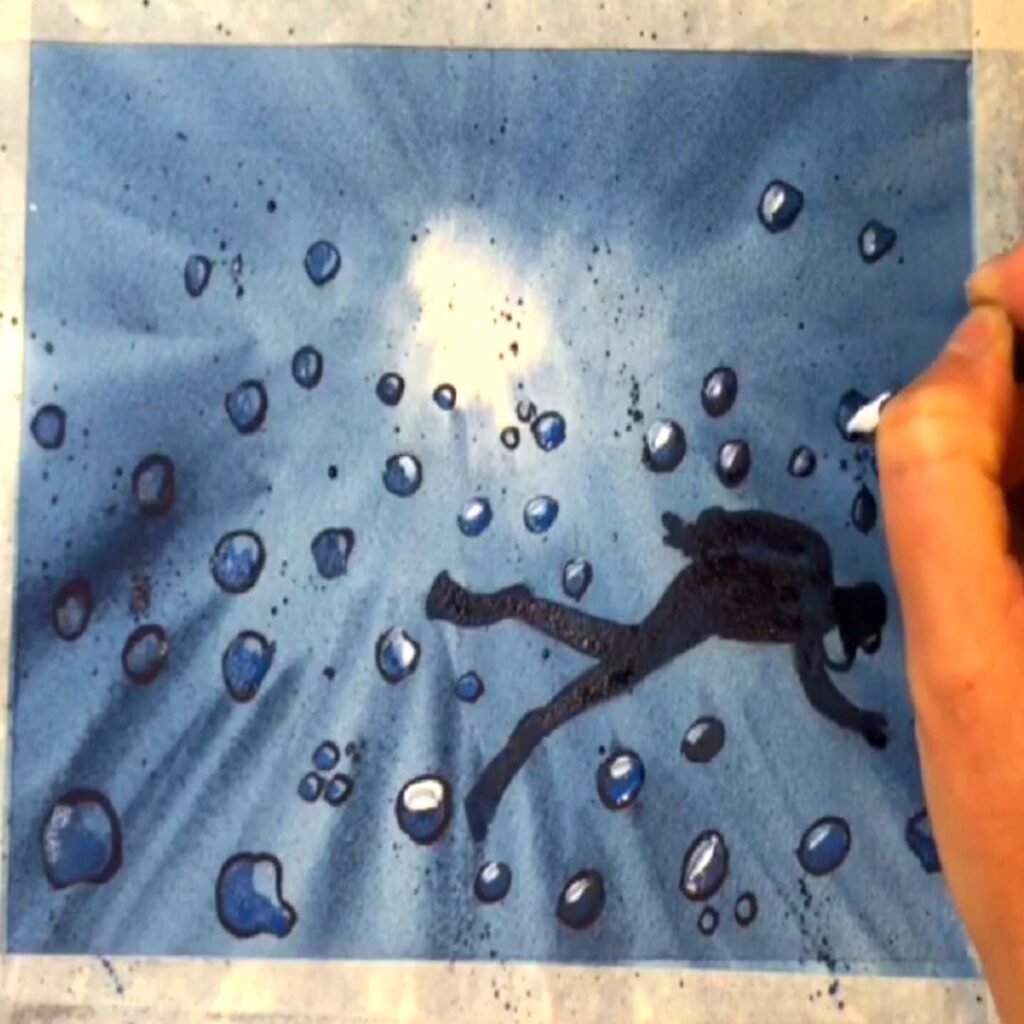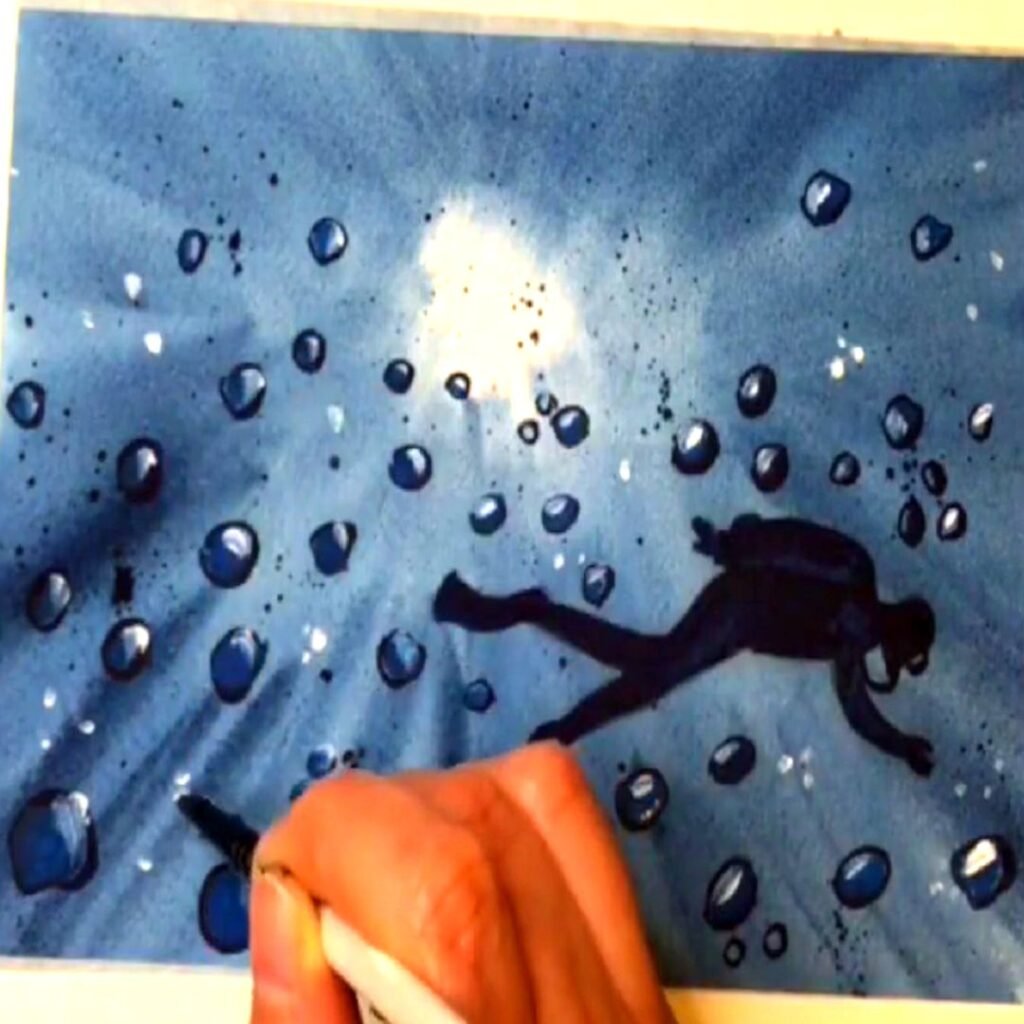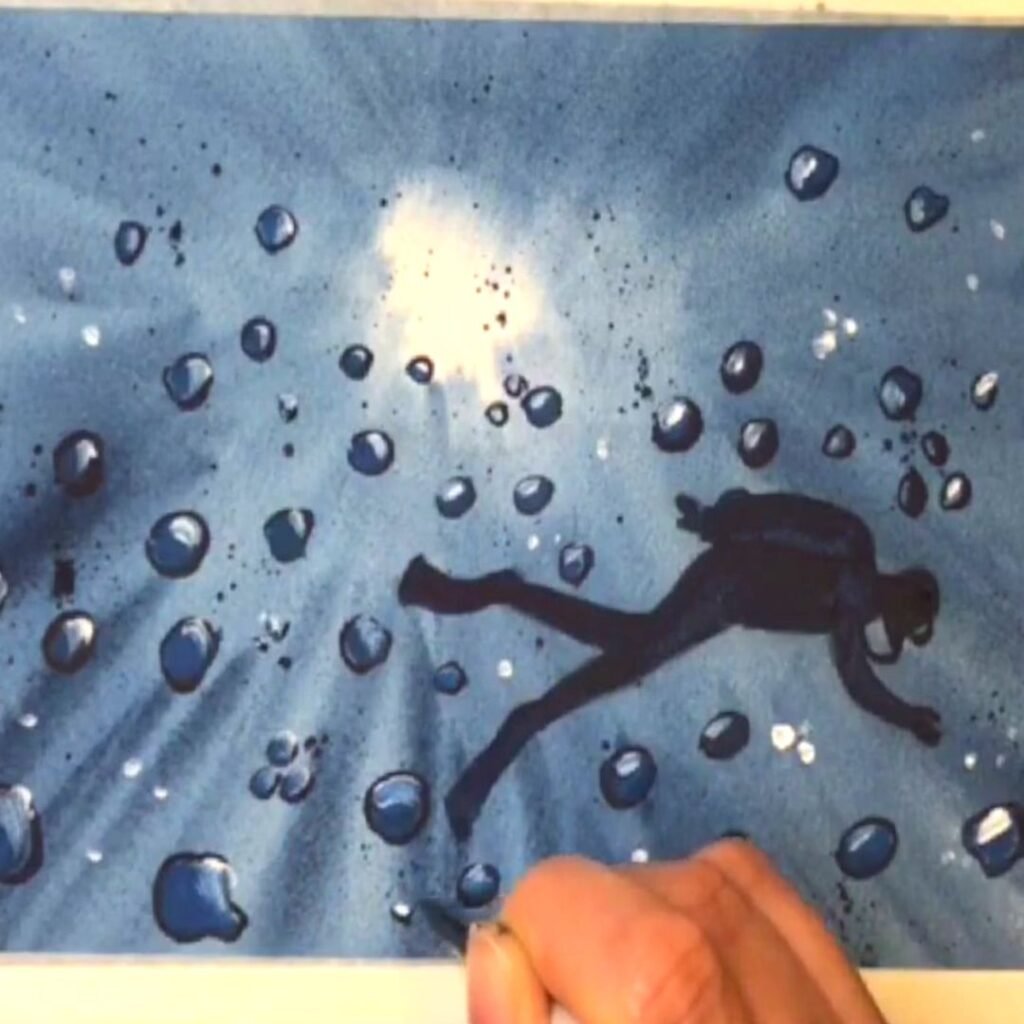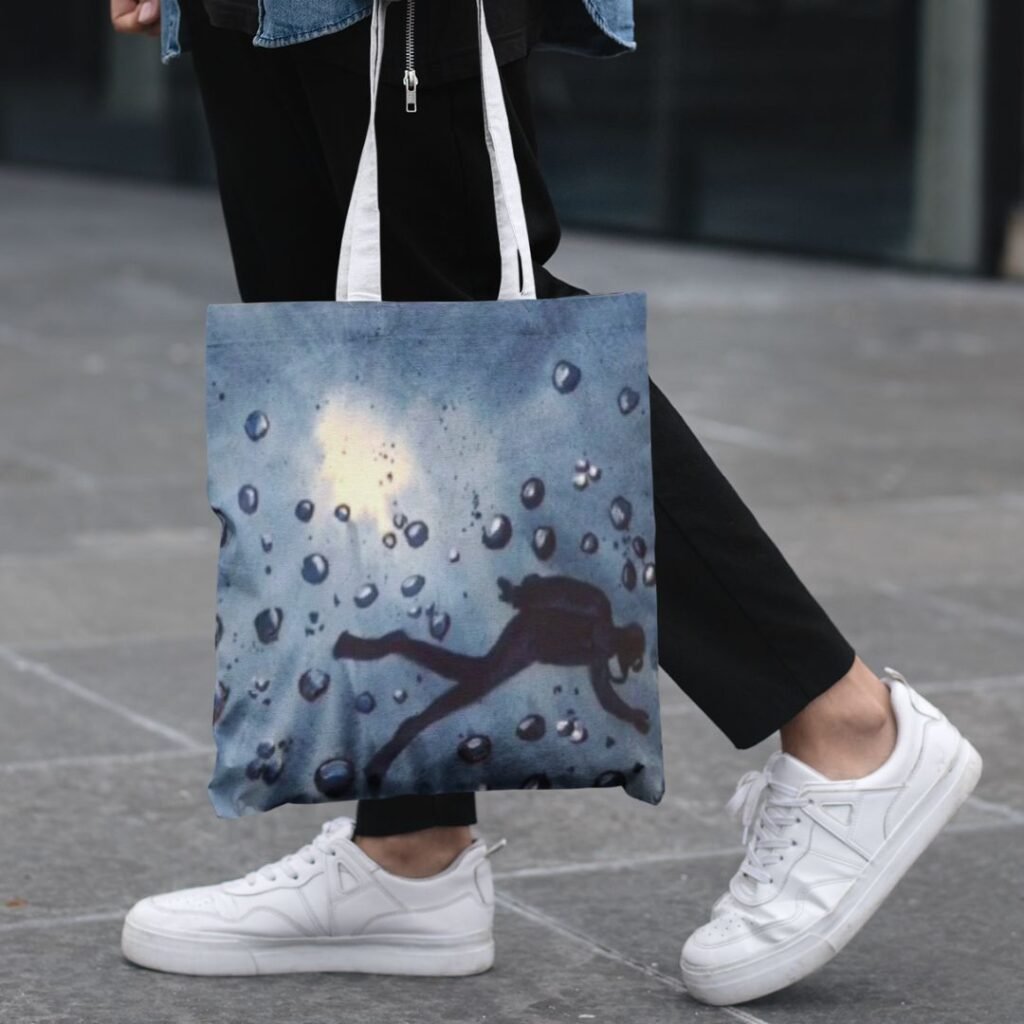

Watercolour Painting is the practice of applying water+ pigment+ colour to a surface, usually watercolour paper. The pigment/pant is commonly applied to the base with a brush. It can be a great fun and an enjoyable process. It can be very relaxing and also a satisfying process where you can see yourself getting better and better with time by practising a bit every day. Remember that this short tutorials aim to inspire you into get creative and express yourself. so then feel free to change few things here and there, even trying different colours to create your own piece.
This watercolour painting tutorial aim to give beginner’s and intermediate students the main information’s they need step by step. Learn with us and have fun in the process of learning watercolour painting.
To start you will not need a lot of materials. Lets begin with:
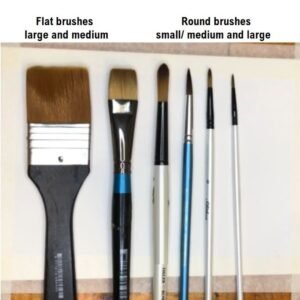
- 3 round brusher (Large,Medium,small).
- 2 flat brushes
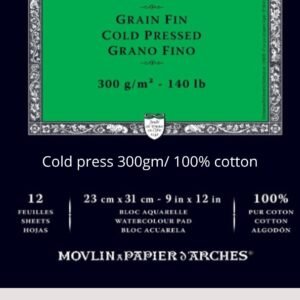
- Watercolour paper: cold press 100% cotton with 300gm
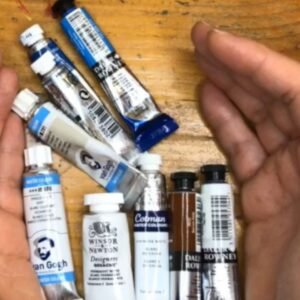
- Professional grade paint of any brand.
- painting palette: porcelain/Ceramic or paint palette aluminium with white coating
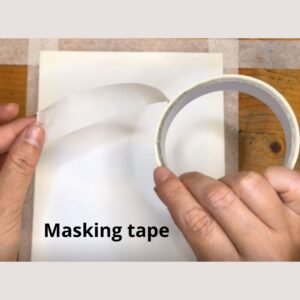
- masking tape
- Recipient for water
- cloth to dry the brush
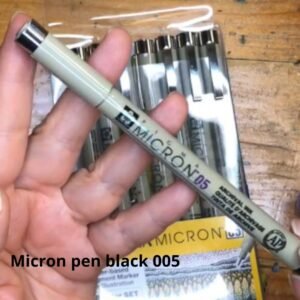
- Good quality line pen
- Good quality watercolour paint


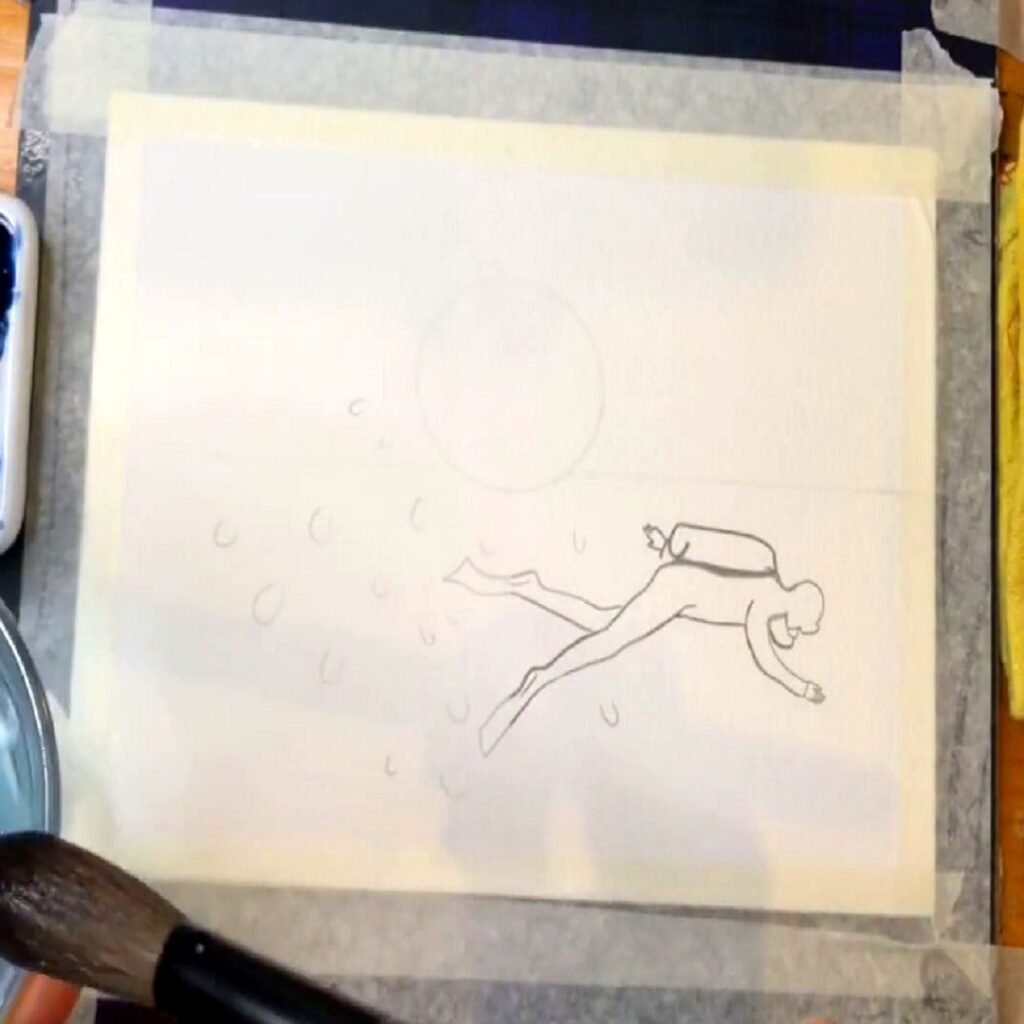
Use a transfer paper or carbon paper or pencil graphite technique to transfer you illustration into your watercolour paper. Download the template here.
If you have a question please feel free to contact us. Please note that reply can take up to 7 days
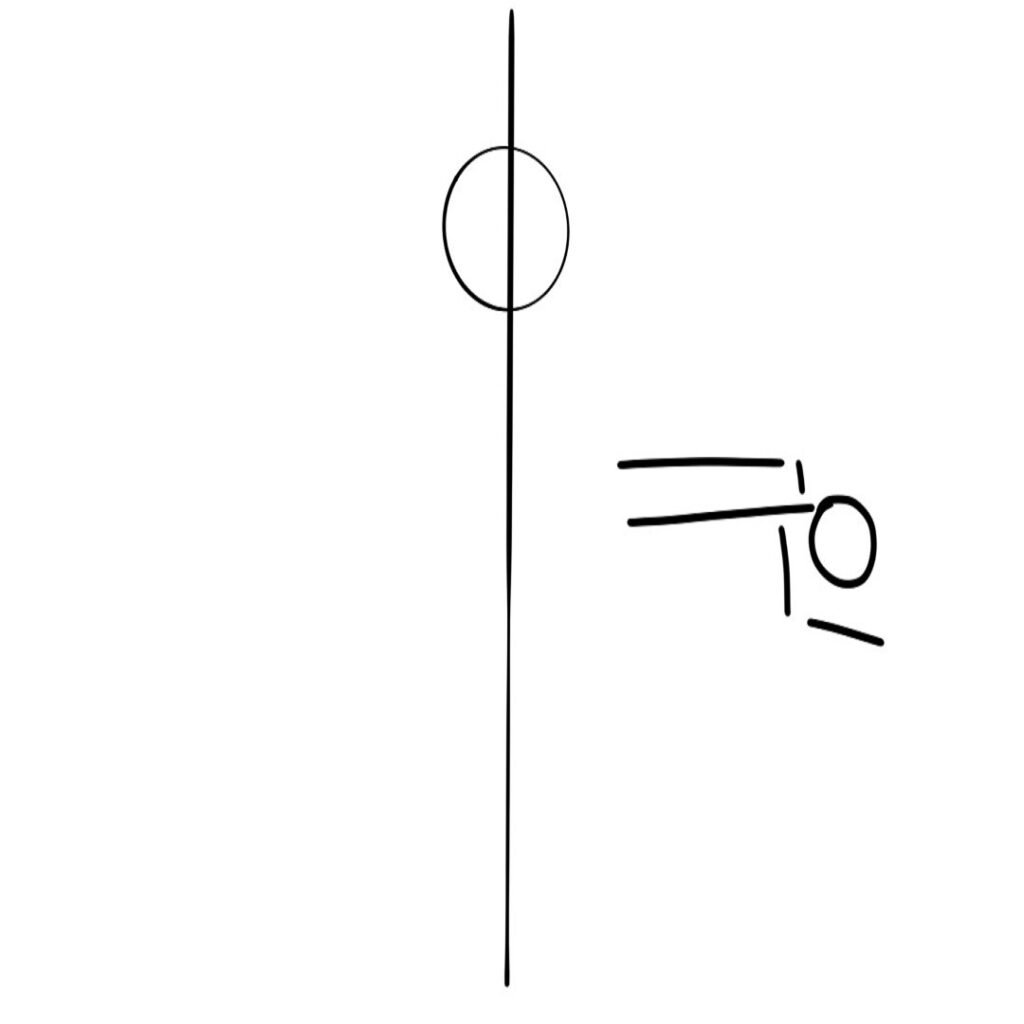
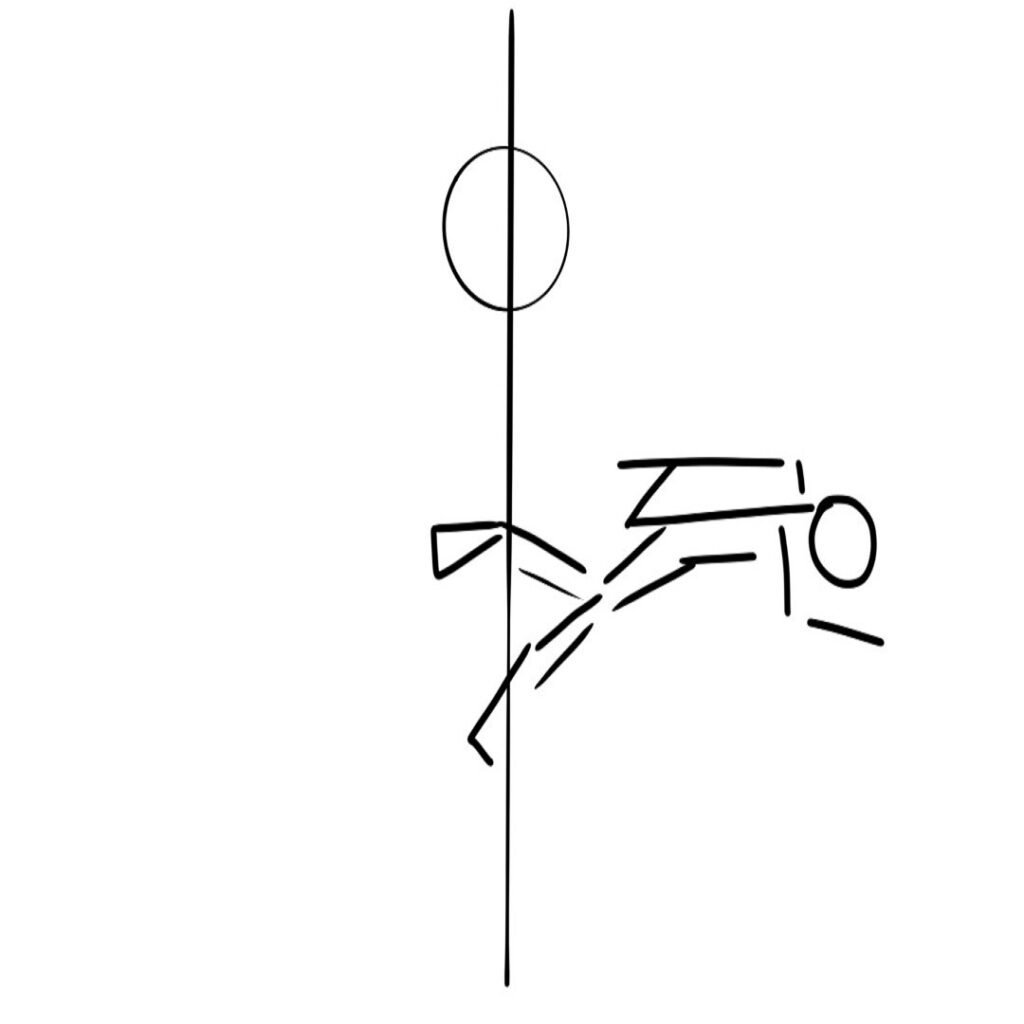
Use the guide to sketch your watercolour paper or download the ready for you template.
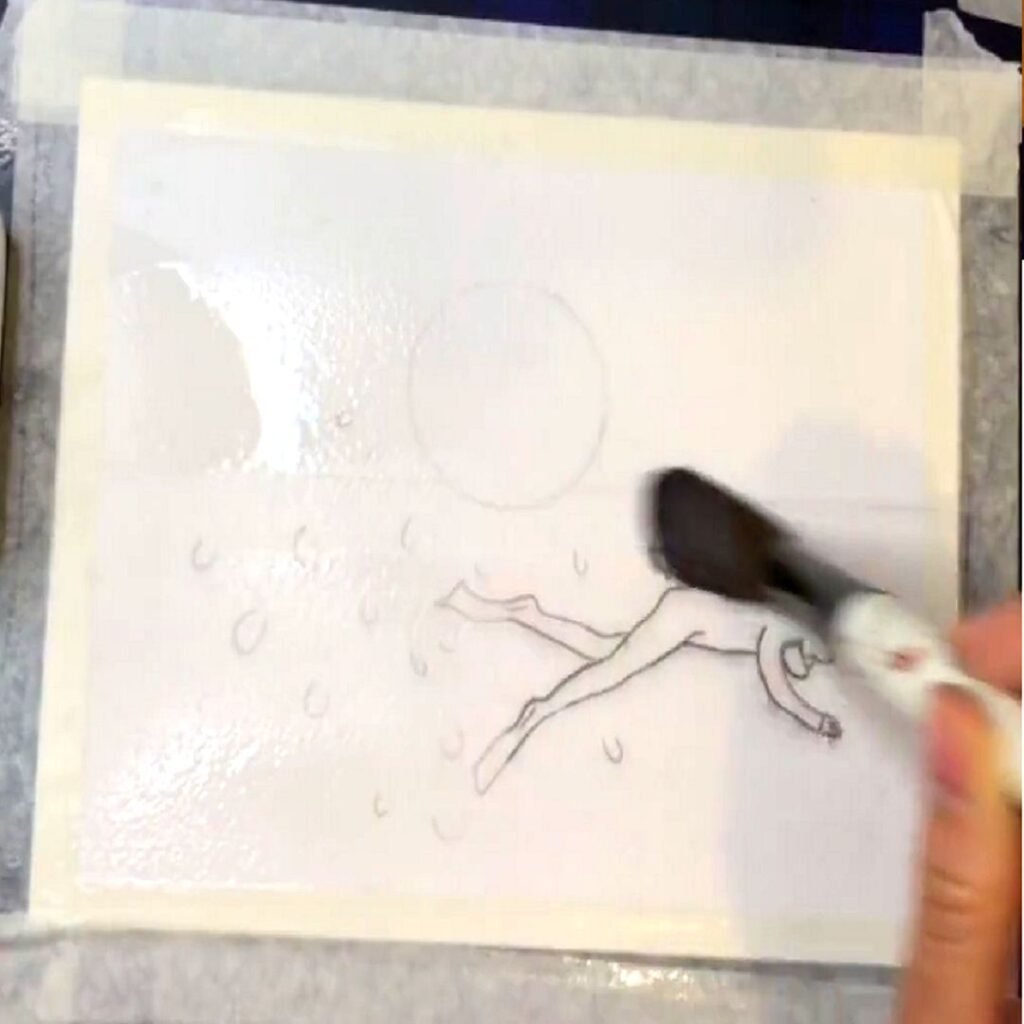
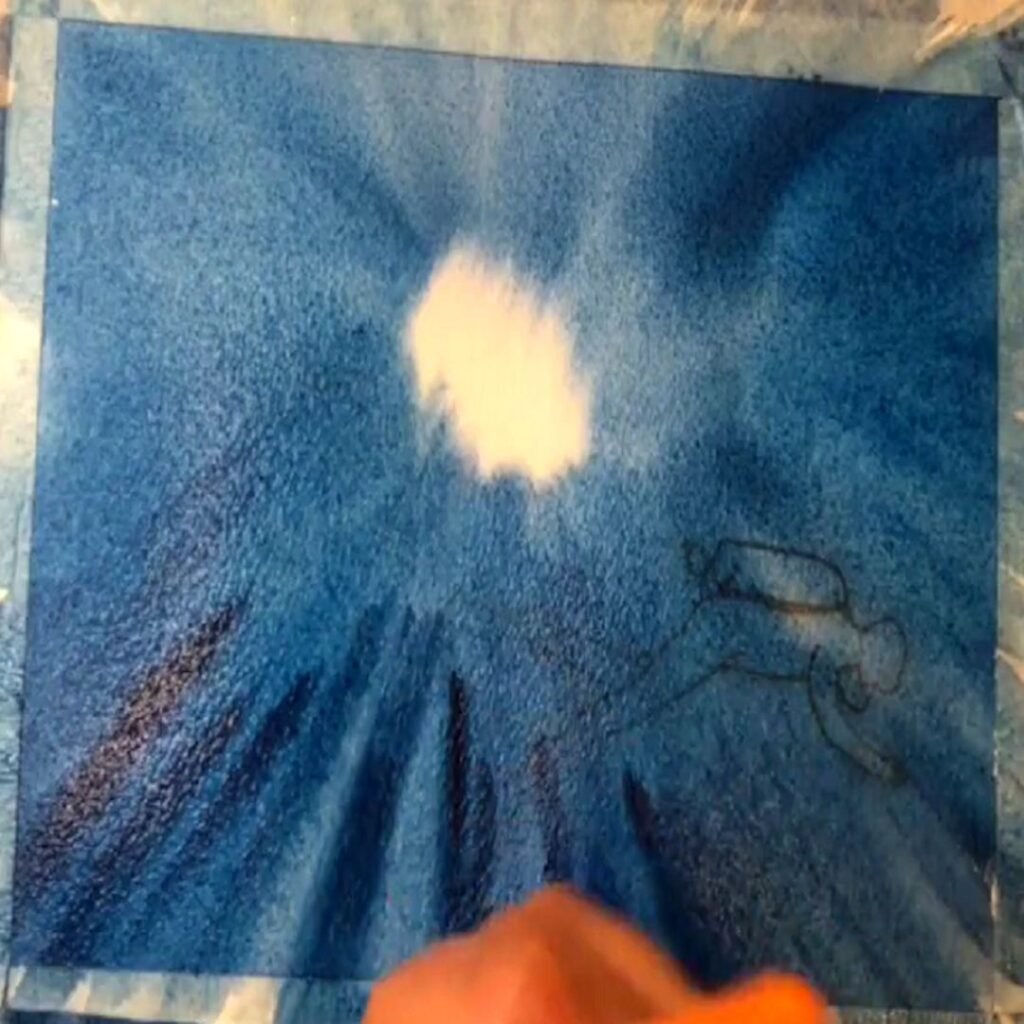
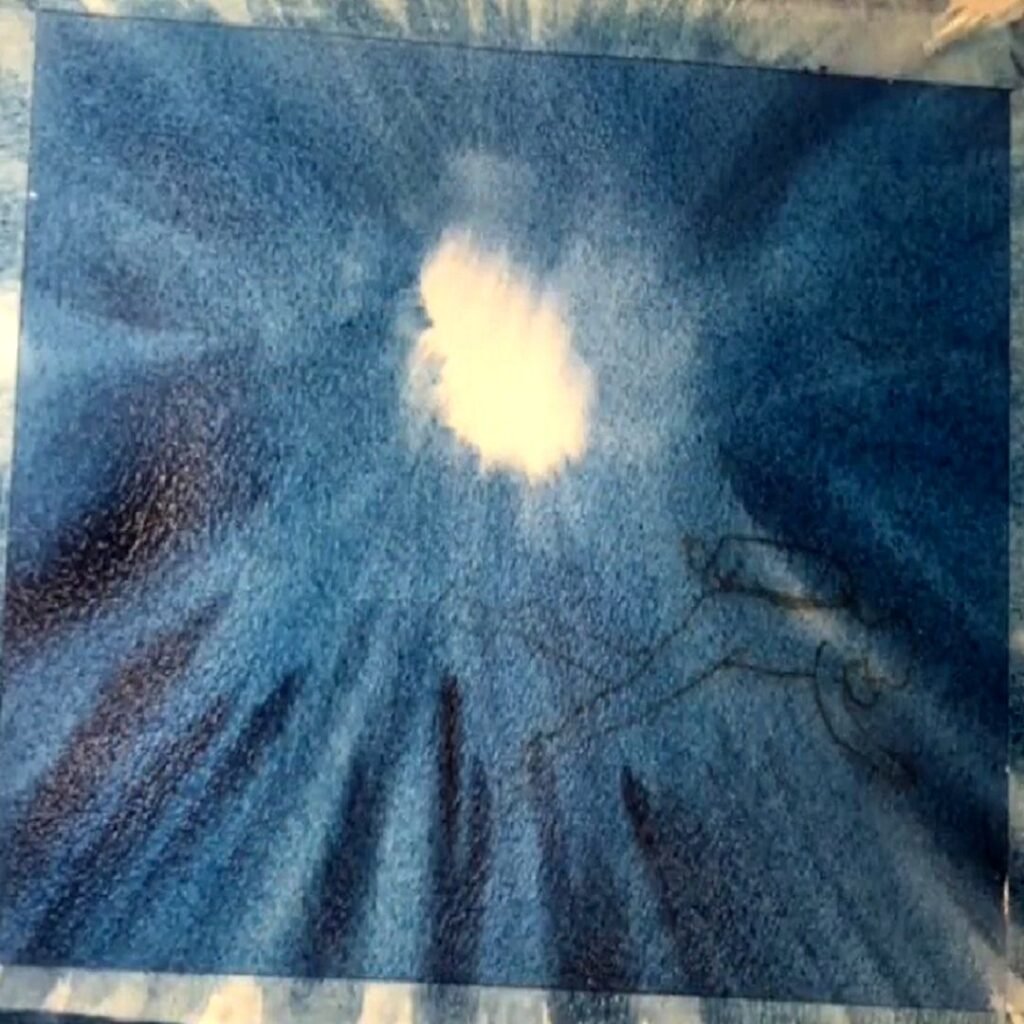
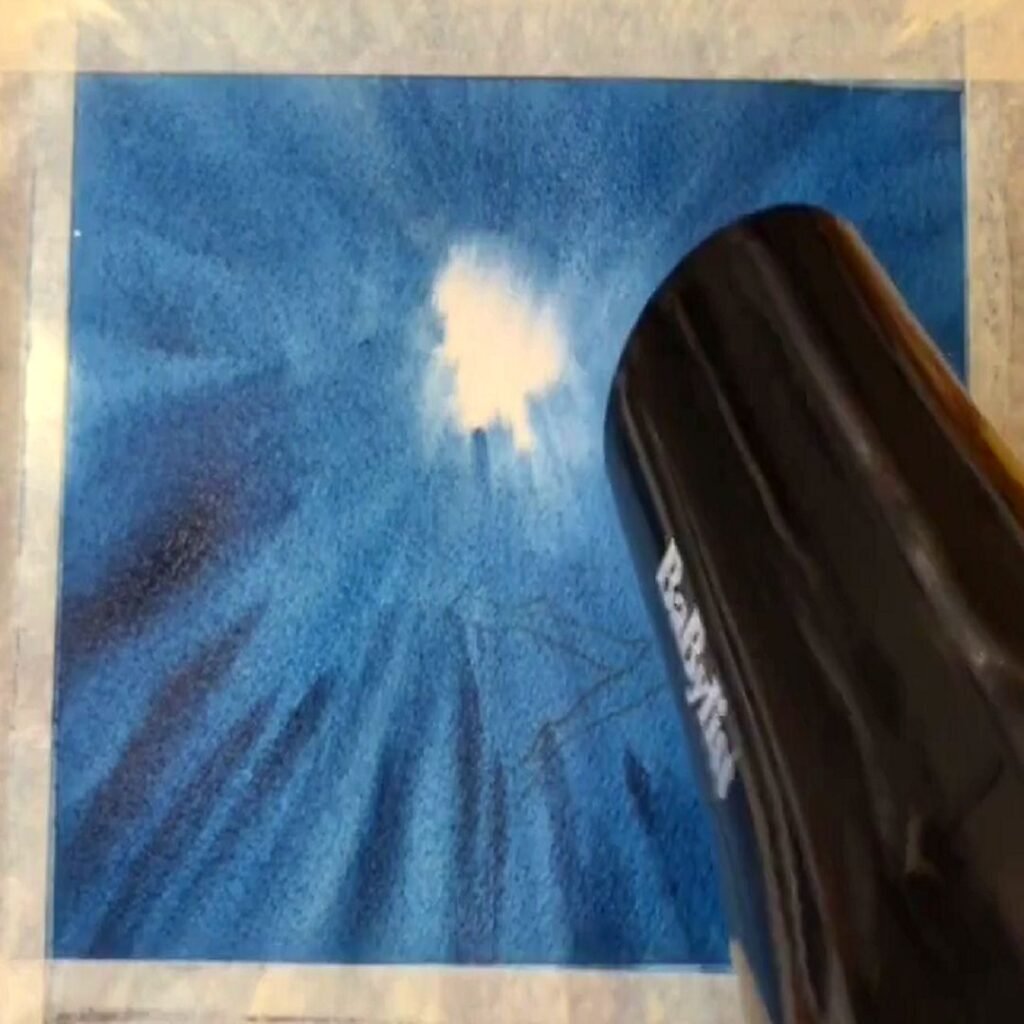
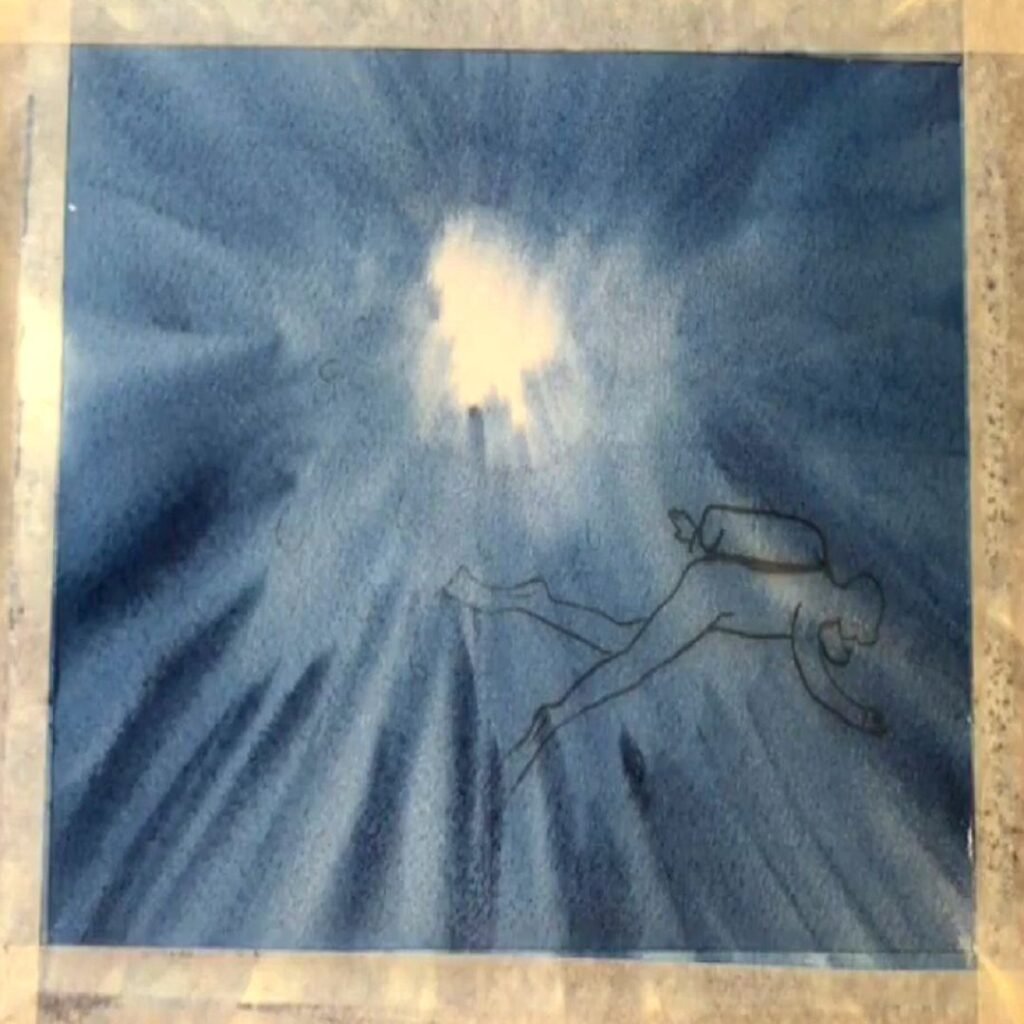
1-get your sketched paper ready. 2-Wet the all area leaving the circle dry. 3- Using your flat brush and starting from the circle to the edge of the paper, go all around with your dark blue.4- while still wet add some extra dark blue (you can create this by adding mixing your blue with a bit of black.) 5- add some line to the bottom area, as you can see in the image. 6- is looking good. 7/8- let dry or use the hair dryer.
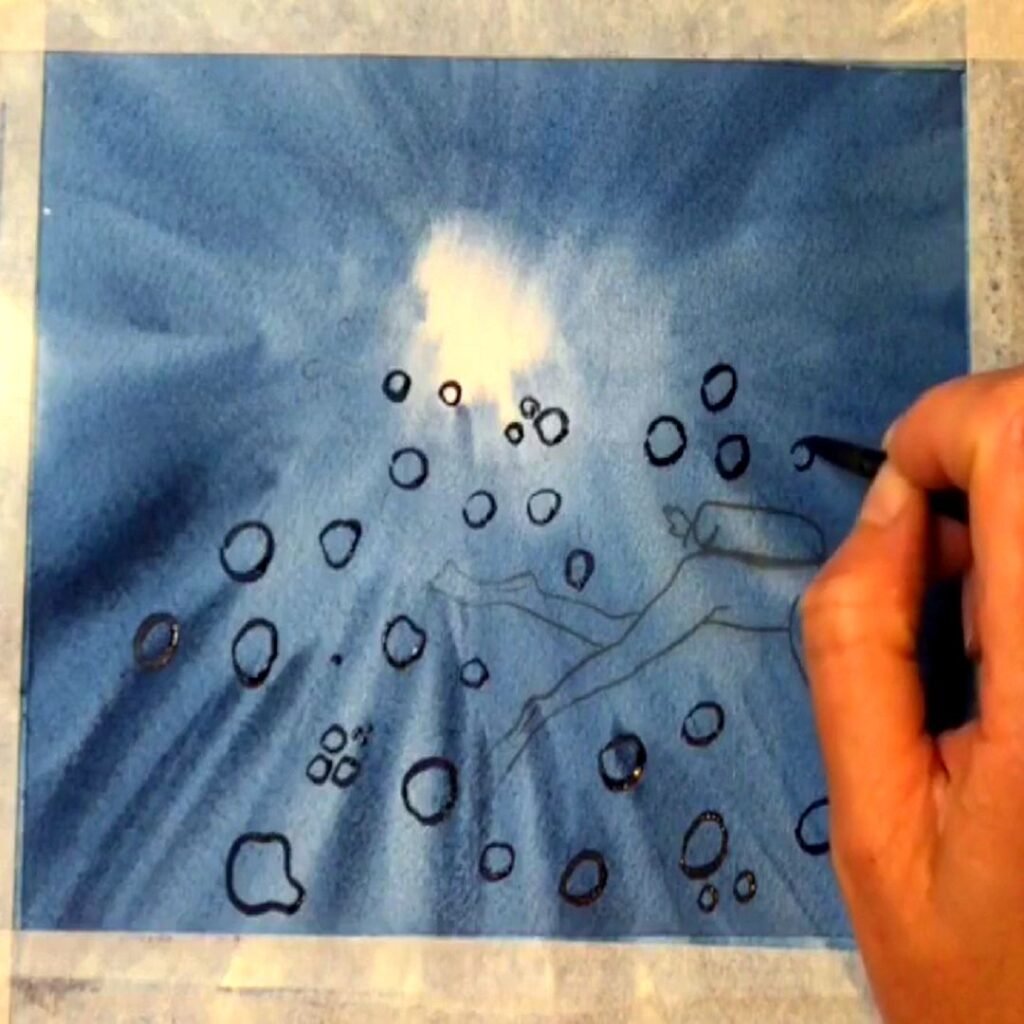
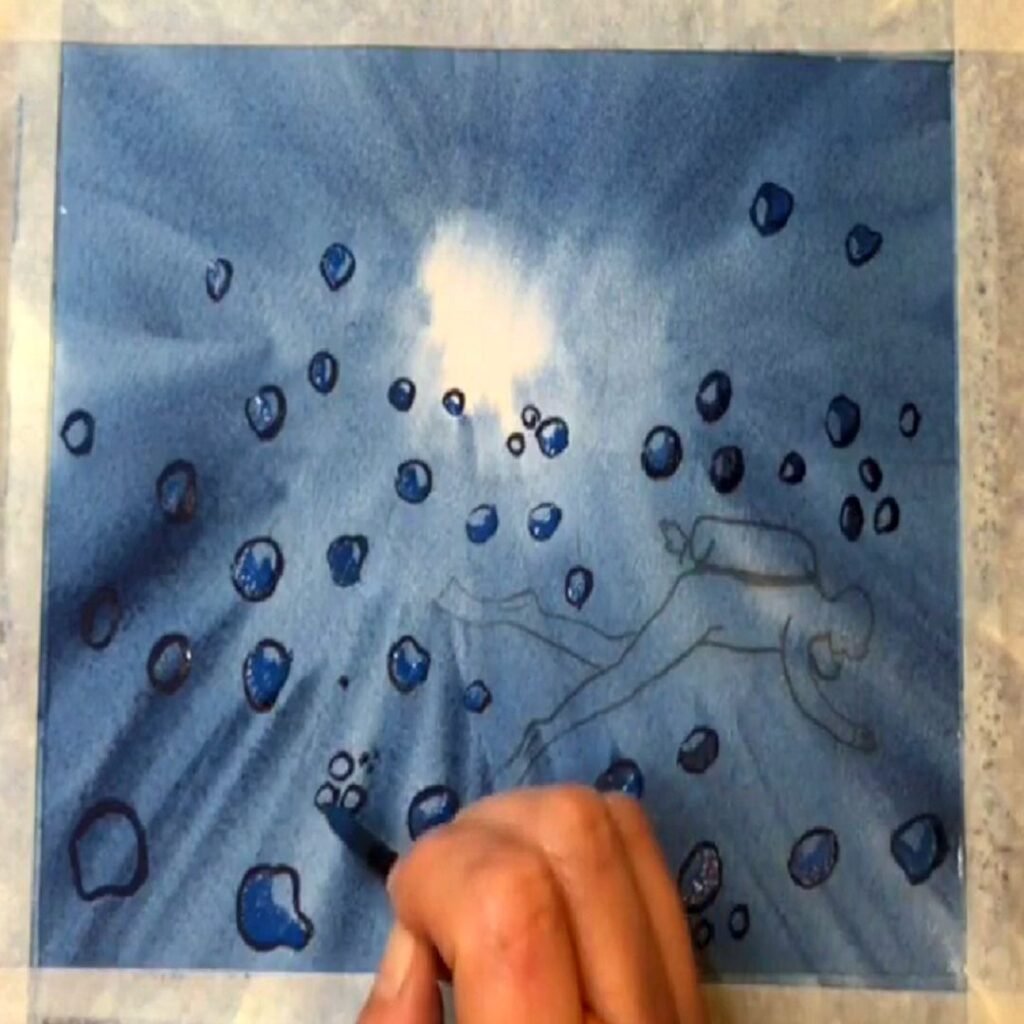
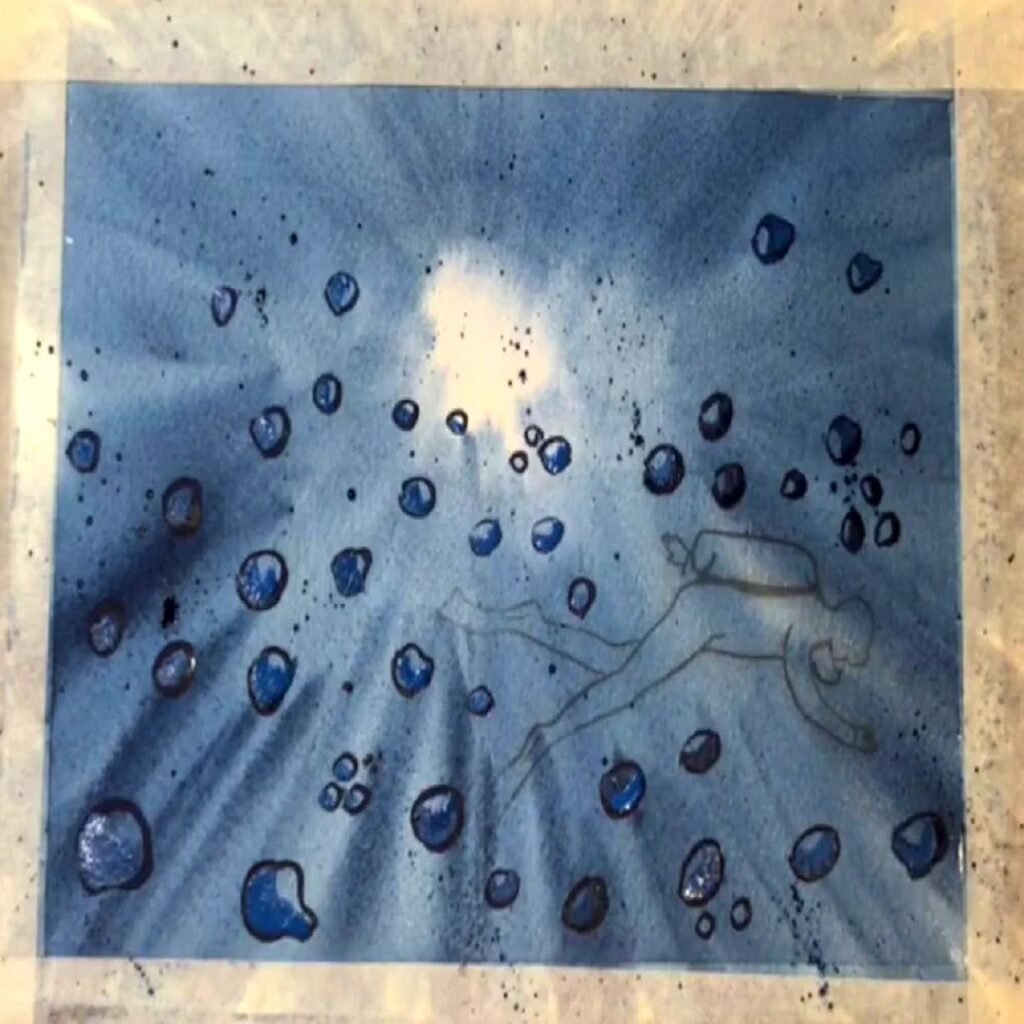
Still using your dark blue, go all around painting irregular shapes. add some lighter ton of blue inside of each one. then is time to use your white gouache to add a dot in each one, as you can see in the image. add some extra small dots of white all around. and the a little touch of dark blue at the edge of each one. Well done!